Learners today are not incapable of focusing; they are selective with their attention. For any Learning Technologies initiative to deliver measurable value, hosting videos is not enough—the platform must orchestrate a deliberate rhythm of review.
1. The science behind the forgetting curve and spaced repetition
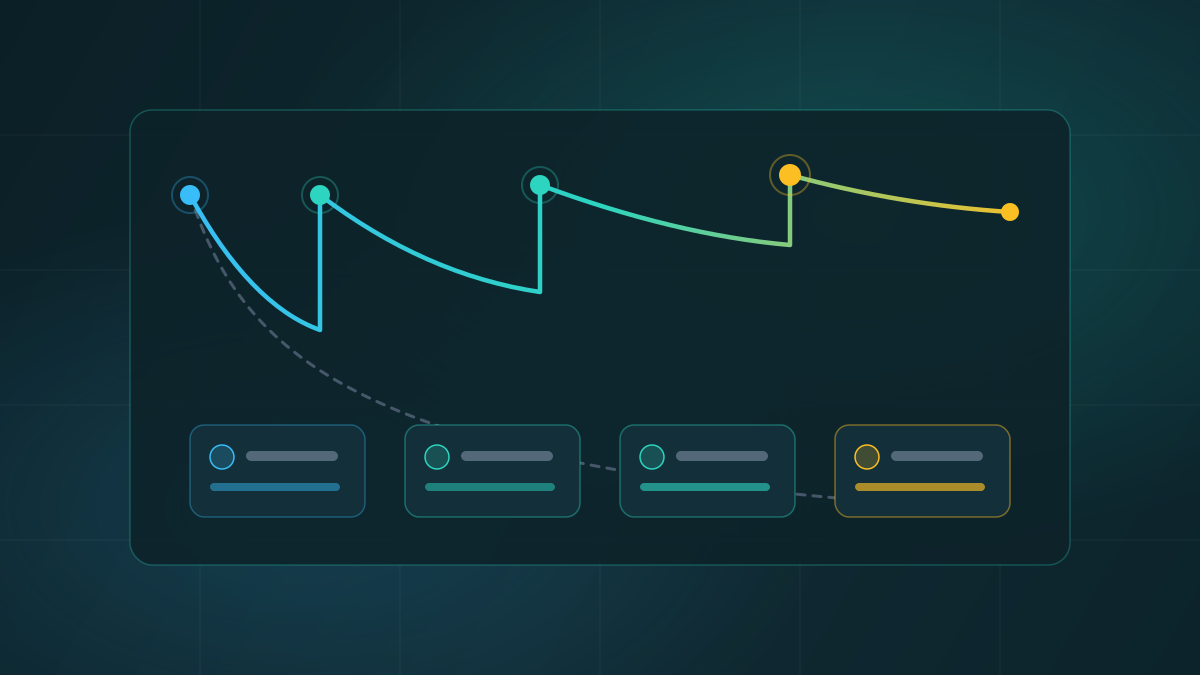
The human brain rapidly filters out information crammed in a single sitting. Research on distributed practice and the spacing effect demonstrates that spreading short review sessions across days or weeks builds far stronger long-term memory traces than massed study.
- First 24 hours: A brief follow-up prompt within a day of initial exposure stabilizes fragile memory traces.
- Expanding intervals: Spaced repetition systems surface challenging concepts more frequently while extending the gap for mastered items.
- Cognitive load control: Focusing each micro-module on one clear objective prevents working memory overload.
2. How learning technologies operationalize spaced microlearning
A well-chosen digital ecosystem automates the cadence designed by the instructional team. In our E-Learning & Digital Content Development projects, we structure technology around four practical capabilities:
- Adaptive Review Nudges: Delivering 90-second reinforcement cards on Days 1, 3, 7, and 21 via an LMS or mobile companion.
- Workflow-Embedded Aids: Providing searchable checklists and branching mini-scenarios right where employees or students perform their tasks.
- Accessible Multi-Format Delivery: Aligning with Universal Design for Learning (UDL) so each micro-unit works seamlessly across text, audio summaries, and visual diagrams.
- Retention Analytics: Tracking delayed recall accuracy through Assessment, Evaluation & Learning Analytics rather than relying solely on click-through completion rates.
3. Massed training vs. spaced microlearning
| Dimension | Single Massed Session | Spaced Microlearning |
|---|---|---|
| Session length | 60–120 minutes continuous | 4–7 minutes focused module |
| Review cadence | Rare or only at course end | Automated on Days 1, 3, 7, and 21 |
| Memory retention | Steep drop within the first week | Sustained long-term recall |
| Workflow fit | Requires blocking large calendar slots | Fits naturally into daily routines |
To see how organizations connect these digital modules to operational metrics, explore our Corporate Learning Design and E-Learning Guide.
4. Where to start in your organization or school
You do not need to rebuild your entire curriculum to benefit from spaced microlearning. Identify the five decision points where learners most often hesitate or make mistakes, and launch a two-week reinforcement pilot around those moments.
Technology alone does not accelerate learning; well-timed small prompts turn fleeting exposure into durable capability.
Arpemit Learning Design Team
Conclusion: Design the timing, not just the length
Real impact from learning technologies comes from pairing concise content with scientifically timed review. If you would like to design a retention-focused digital learning system for your team or school, reach out via our contact section to schedule a discovery call.