At our kick-off meeting, the HR and operations leads put a familiar picture on the table: newly hired agents were completing their two-week classroom onboarding without fail and scoring well on end-of-course quizzes. Yet the moment they put on a headset and took live calls, a different reality emerged. Average handle time climbed, first-call resolution dropped and a significant share of new hires left within their first 45 days.
The issue was not a lack of motivation. The issue was the gap between idealised classroom rules and the messy reality of live customer conversations. When we began this project through our Corporate Learning Design practice, our first step was to pause slide production and listen to the actual learning problem on the floor.
1. Needs analysis: Real call recordings over slide decks
Following the ADDIE model, we started our analysis not with existing manuals, but by reviewing 50 of the toughest call recordings from the previous quarter alongside team-lead escalation tickets. We quickly saw that agents struggled less with product facts and far more with decision-making and emotional regulation under pressure.
- Agents could recite product features, yet struggled to summarise a caller's core complaint in two sentences.
- Objection-handling scripts taught ideal phrases, but offered no practical flow when a customer's voice rose.
- Two weeks of dense front-loaded theory triggered steep forgetting curves before agents ever spoke to a customer.
2. A 30-60-90 day modular learning architecture
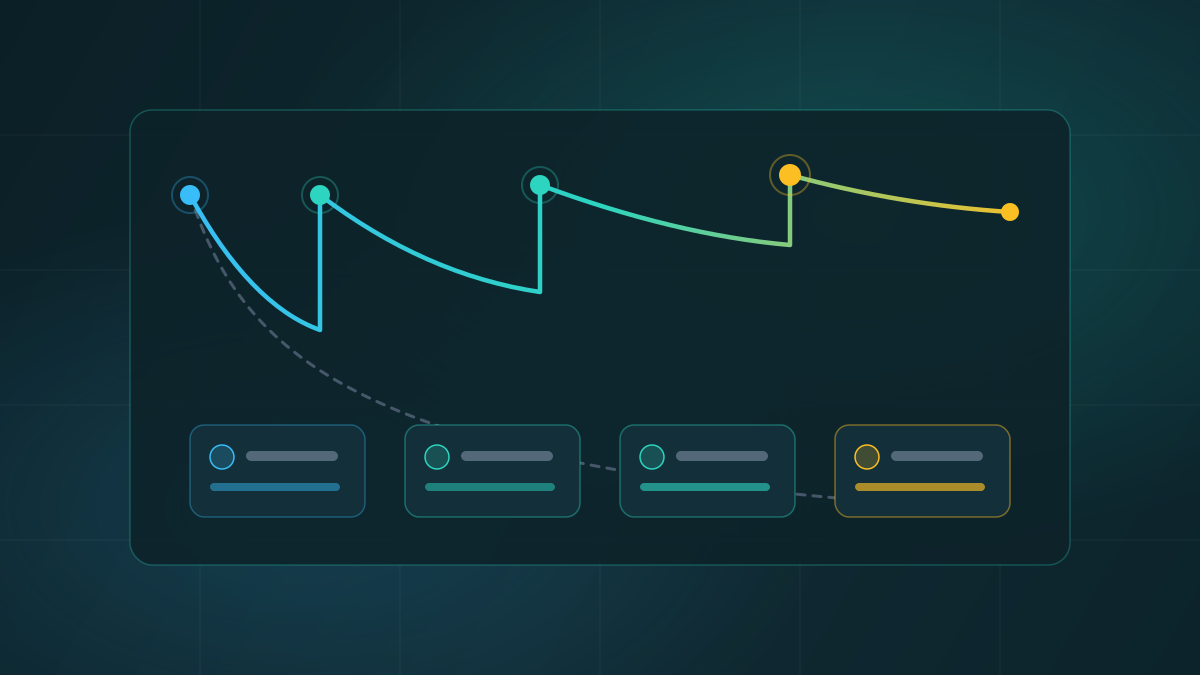
Instead of two uninterrupted weeks of lecture, we built a three-stage journey embedded into daily work. Applying the backward-design logic covered in What Is Instructional Design? ADDIE, ARCS and Backward Design, we defined target call behaviours first, evidence second and content last.
- Days 1–14 (Foundation & Confidence): Five-to-seven minute micro-learning modules paired with core system simulations, each focused on a single call objective.
- Days 15–30 (Branching Scenarios): Interactive dialogue simulations where agents faced realistic customer objections and every choice changed the caller's reaction.
- Days 31–90 (Reinforcement & Coaching): Weekly 15-minute call-listening and structured feedback rituals led by team supervisors.
We produced the branching dialogue modules through our E-Learning & Digital Content Development workflow so agents could make mistakes in a safe environment and receive instant feedback before speaking to live customers.
3. Building a daily practice habit
Expecting call centre agents to read long manuals between shifts is unrealistic. Aligning technology with the seven layers outlined in What Are Learning Technologies? 7 Layers, we introduced six-minute daily "Call of the Day" scenario challenges.
Effective call centre training does not hand agents memorised scripts; it builds the reflex to stay calm and choose the right question in an unpredictable conversation.
Arpemit Learning Design Notes
4. Measuring field growth, not just completion
Most organisations stop evaluation at attendance and quiz scores. Guided by the Kirkpatrick Four-Level Training Evaluation Model, we set up a 90-day impact dashboard through our Assessment & Learning Analytics service.
| Metric | Previous Training (Before) | New Design (Day 90) | Change |
|---|---|---|---|
| First-Call Resolution (FCR) | 64% | 81% | +17 pp improvement |
| Average Handle Time (AHT) | 7m 40s | 5m 50s | 24% faster |
| First-45-Day Attrition | 28% | 14% | 50% reduction |
| Time to Live-Call Readiness | 21 days | 12 days | 9 days saved |
These indicators proved that learning was no longer staying inside the LMS — it was translating directly into customer satisfaction and operational efficiency.
Conclusion: Every call centre is unique, the principle holds
This case story highlights a simple truth: performance gaps in call centres are rarely solved by adding more training hours, and almost always solved by better-designed practice and feedback. If you want to accelerate onboarding or connect your training programmes to measurable business outcomes, reach out to our team to book a free 30-minute discovery call.